Digital Irony and Emotional Detachment in Gen Z Meme Culture
In the digital age, humor has become one of the most visible ways that younger generations express identity, cope with uncertainty, and build community. Platforms like TikTok, Instagram, and YouTube have turned memes into social commentary, as tiny performances that reveal collective attitudes and anxieties. Among these, two recent memes, The Gen Z Stare and ‘6,7?,’ both covered by the YouTube channel Lessons in Meme Culture, stand out as reflections of Gen Z’s complex relationship with emotion and authenticity. Beneath their surface-level absurdity lies a deeper pattern of digital irony and emotional detachment; a way of performing indifference that protects against judgment in a hyper-visible online world.
 The Gen Z Stare meme typically depicts a blank, unamused face frozen in silence. An image often represented through these clips is of the animated character B.O.B. from Monsters vs. Aliens. His blue, translucent body, goofy, wide, expressionless eye, and still open mouth exaggerate apathy as the center of this meme. This face circulates online as a shorthand for the “emotionless” young worker or teen, someone who stares back at authority, customers, or social expectations with an unreadable neutrality. According to Lessons in Meme Culture, the Gen Z stare began as a generational stereotype where older generations accuse younger people of lacking social skills or enthusiasm. This blank expression functions like a dramaturgical mask, as an emotional performance shaped by years of constant digital exposure and the isolation of the pandemic era. It reveals a tension between the demand for enthusiasm and the desire for emotional distance in public interaction.
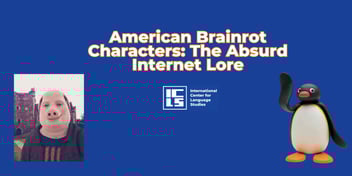
 The ‘6,7?’ meme, by contrast, uses hyperactivity and nonsense rather than silence to achieve the same ironic tone. In the image, a young basketball player looks at his hands in confusion, counting his fingers before blurting, “six, seven?” lifting his arms up and down, weighing, with a goofy, exaggerated expression on his face, while bold white numbers flash on the screen. The moment originated from a viral TikTok clip connected to a song lyric, “6,7,” which became detached from its original context and evolved into a phrase used to mean everything and nothing at once. As Lessons in Meme Culture explains, “6,7” became a linguistic game where meaning is deliberately suspended. Users post “6,7” as a comment, caption, or soundbite in situations that defy explanation. The humor lies in its emptiness, resisting many forms of interpretation. “6,7?” performs absurdity as a shared social code. Through a symbolic interactionist lens, the meme becomes a generally agreed-upon form of interaction, where nonsense replaces sincerity, and meaning is produced collectively through ironic detachment.
Both memes reflect a broader societal issue: the normalization of emotional detachment and irony as survival strategies in digital culture. In a world where every action can be recorded, reposted, and judged, sincerity often feels risky. Irony, by contrast, can feel safer. Through humor that disguises vulnerability, Gen Z collectively redefines what counts as authentic emotion. As I can personally confirm, in many of my social interactions, online or not, the Gen Z Stare seems to turn apathy into its own form of identity, while the ‘6,7?’ meme turns confusion into a rather forced yet collective form of connection. Together, they show how many young people use humor to navigate a media environment that rewards performance over genuine presence.
Memes like The Gen Z Stare and ‘6,7?’ demonstrate how Gen Z expresses emotion through irony rather than sentiment. They act more as mirrors of an online culture that values self-awareness over sincerity, and as masks that protect against vulnerability in an age of constant visibility. In a sense, the “stare” and “6,7” are more than jokes. They are cultural scripts that define how a generation communicates, feels, and connects in the digital era.
By Chase Coulson is a Hudson Valley, New York native currently based in Los Angeles. He’s a junior studying Creative Writing and Screenwriting at the University of Southern California (USC). He is always looking for opportunities to publish and share his work; more can be found at chasecoulson.com